


TECHO ELECTRICAL & MECHANICAL
BLOG
Jan 04,2026
Industrial AC Motors & Water Pumps | 30% Energy Savings | Global Supplier
TITECHO IE3/IE4/IE5 motors & smart pumps cut energy costs 30%. IoT sensors & AI predictive maintenance reduce downtime 40%. CE/UL certified. 30+ countries served. 24h custom quote.

In the context of energy management, emissions reduction and industrial automation, industrial equipment selection should reflect the required duty point, installation environment, applicable regulations and lifecycle considerations. For discussions concerning TITECHO three-phase AC motors and water pumps, product suitability, available configurations and technical documentation should be confirmed for the specific application. For product information or an initial project discussion, please visit www.cntecho.com.
Energy Efficiency: A Key Selection Consideration
Energy-efficiency requirements vary by market, application and product category. Depending on the motor series and target market, references to IEC 60034 and efficiency classifications such as IE3, IE4 or IE5 may be relevant. The applicable classification, test basis, marking, documentation and suitability for a destination market should be confirmed using the specific model data sheet, product configuration and project requirements.
For systems using a motor with a centrifugal or self-priming pump, expected energy use should be evaluated from the relevant performance curves, control strategy, operating hours and site conditions. Motor losses, pump efficiency and system results depend on the selected model, duty point, installation and maintenance practices. Any projected energy, cost or maintenance outcome should be calculated against a defined site baseline and stated assumptions.


Products for Application-Specific Requirements
Three-phase motors and water pumps may be considered for industrial applications such as mining support systems, cooling circuits, water handling and other process duties, subject to engineering review. Before selection, the required flow, head, medium characteristics, solids content, temperature, pressure, electrical supply, control method, installation arrangement and environmental conditions should be defined. Material selection and protective features must be confirmed for the particular medium and operating environment.
Water-supply, wastewater and irrigation projects require application-specific evaluation of hydraulic duty, seasonal operating profile, available power, water quality, maintenance access and local requirements. A proposed motor-and-pump arrangement should be reviewed against the relevant performance data and site constraints. Expected water, energy, maintenance or agricultural outcomes should be assessed from verified operating data and project-specific assumptions rather than treated as default product results.


Documentation and Project Considerations

References to certifications, declarations, markings and technical documents may vary with the product configuration and target market. For a proposed motor or pump, the applicability of references such as CE, UL or ISO-related documentation should be confirmed against the relevant product documents and for the intended destination before an order is placed. Availability, logistics options, delivery timing and any regional service arrangements should likewise be confirmed for the specific product, quantity, destination and order terms.
For a project, installation information, technical questions, maintenance considerations, training needs, spare-parts planning and possible customization should be identified in the agreed scope. The scope, response arrangements, any on-site work and availability of parts or accessories must be agreed in advance. For high-altitude, low-temperature, special-medium or other demanding duties, product configuration should be reviewed against the specified mechanical, electrical, environmental and process requirements.
Condition-Monitoring Considerations
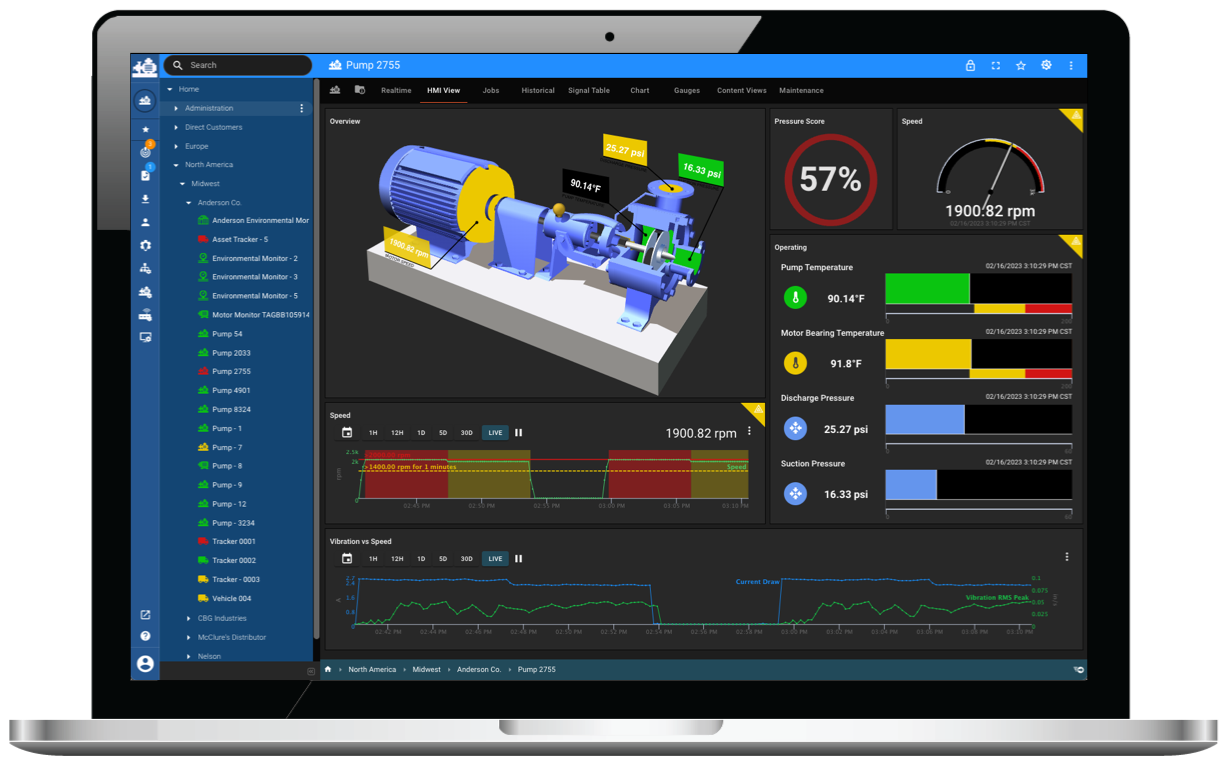
Equipment selection may take account of the control, material and monitoring needs of a project. Where condition monitoring is required, sensor interfaces, data acquisition, control equipment and compatible supervisory systems should be evaluated during the engineering stage. Parameters such as temperature, vibration, current and voltage may be relevant to an agreed monitoring approach, but the available functions and data outputs depend on the selected equipment, communications architecture and installation conditions.
Any remote monitoring, diagnostics or predictive-maintenance workflow should be assessed as part of the complete site system, including commissioning, connectivity, operating procedures and data responsibilities. Wear resistance, material suitability, service intervals and expected product life depend on the medium, duty cycle, operating point, environment, maintenance practices and confirmed product configuration. These factors should be reviewed using the relevant technical data and project documentation.
Discuss TITECHO Product Requirements
For industrial, municipal or agricultural applications, an initial discussion can focus on the required duty point, medium, electrical supply, installation conditions, control requirements, target market and documentation needs. This information supports an application-specific review of product options, configuration and quotation scope. Final selection should be based on the agreed technical documents and order confirmation.
Explore TITECHO Product Information →
Related News
LATEST
INFORMATION
Get the latest product information of the company
NAVIGATION
PRODUCTS
CONTACT US
Telephone: +86 13305761511
Email: info@cntecho.com
Add: RM. 602, BUILDING B, NO.1551 SHUANGSHUI RD., LUQIAO DIST., TAIZHOU CITY, ZHEJIANG, CHINA

Copyright © 2026 TECHO ELECTRICAL & MECHANICAL (TAIZHOU) CO., LTD. All Rights Reserved.